 English
|
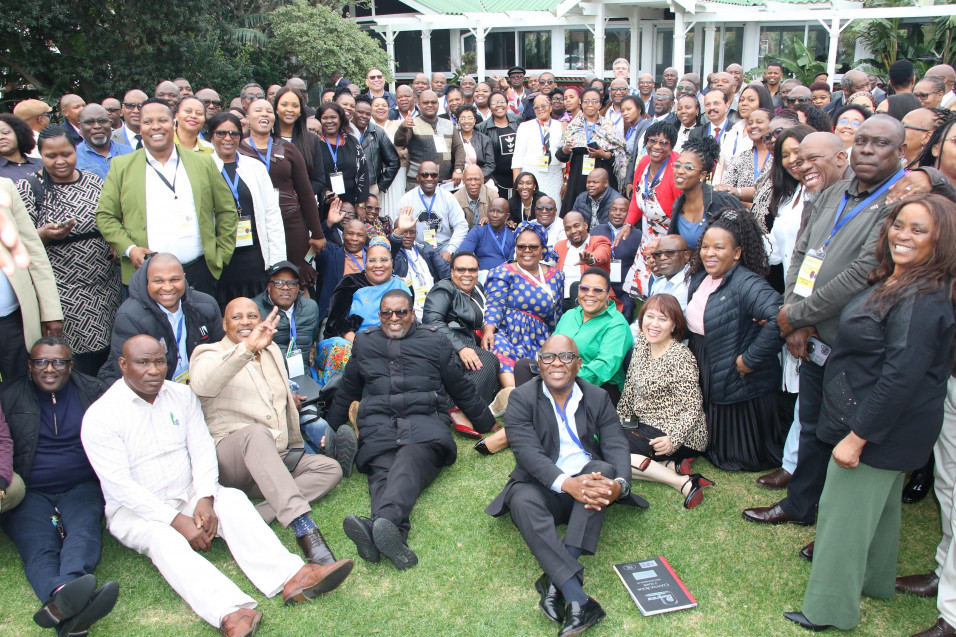
Shaping the Future: ECDoE Hosts the School Rationalisation and Realignment Summit for Quality Education By: Sinazo Qwashu The Eastern Cape Department of Education recently convened a pivotal summit on the School Rationalisation and Realignment Program, bringing together key stakeholders to discuss the initiative's progress and future plans. This strategic program aims to enhance the quality of education in the province by optimizing resource utilization, reducing the number of underperforming schools, and providing improved support for learners. This event took place in Gqeberha on the 4th & 5th of September 2025. With nearly 2,000 small, unviable and dysfunctional schools in the province facing significant challenges, the department has identified rationalisation as a critical step towards improving the education system. The summit provided a platform for stakeholders to engage with the program's objectives, challenges, and potential solutions. The Head of Department, Sharon Maasdorp, emphasized the department's commitment to creating an education system that is efficient, effective, and equitable. "Through this program, we are committed to creating an education system that is efficient, effective, and equitable. By redirecting learners to functional schools, we can ensure that they receive the support and resources they need to thrive." Deputy Director-General for Curriculum, Ray Tywakadi, highlighted the purpose of the summit stating, "A summit is called because there is a problem that is confronting us as public policy managers. In the summit, we will be dealing with a specific policy which is alignment, realignment, adjustment, and rationalisation of schools based on a specific context." One of the objectives of the summit was to redesign the schooling landscape of the province, ensuring that the education system aligns with broader educational objectives. Phaphama Mfenyana, the Rationalisation Program Manager, highlighted the pressing issues faced by some schools, where learners attend classes seven days a week, particularly in Grade 12. "The rise of having classes seven days a week for Grade 12s is because we are not concentrating on the grassroots level." He also clarified the rationalization process saying, "the program doesn't only close schools but merges them, ensuring a more efficient and effective use of resources." The department is collaborating with the Department of Transport to ensure that learners can easily access their new schools. Additionally, infrastructure development is also involved providing hostels for learners who require accommodation. The program is grounded in legislation that stipulates a teacher-to-learner ratio of 1:40. However, some schools in the province still struggle with shared classrooms for multiple grades, underscoring the need for rationalisation. As the program continues to unfold, it is expected to have a positive impact on learner outcomes and the overall quality of education in the province. The summit was attended by a diverse range of stakeholders, including the Office of the MEC, Office of the Executive Mayor, Eastern Cape Education Advisory Council, District Education Forum, Public Works, Department of Transport, Federation for School Governing Bodies, Provincial Labour Relations Council, and Oganized Labour. The presence of these stakeholders underscores the collaborative effort required to drive meaningful change in education. |